These Hair Loss Treatments Really Work – Without Surgery or Side Effects
Hair loss is one of the most common — and most emotionally difficult — aesthetic concerns affecting both men and women. Watching hair thin, recede, or fall out can take a serious toll on confidence and self-image. And while the internet is flooded with products and promises, many well-known hair loss treatments come with significant drawbacks — from harsh medication side effects to the expense, pain, and scarring of surgical transplants.
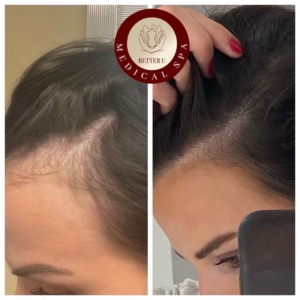
The good news is that advanced, nonsurgical hair loss treatments now exist that can genuinely stimulate new hair growth — naturally, painlessly, and without the downsides of older approaches. At Better U Medical Spa in Bergen County, hair loss treatment expert Dr. Hetal Gor, MD offers PRP therapy and Lutronic LaseMD laser treatment as safe, effective, and affordable alternatives that are helping patients reclaim thicker, healthier hair.
Common Causes of Hair Loss in Men and Women
Hair loss can be caused by a wide range of factors, and understanding the underlying cause is the first step toward effective treatment. In men, androgenetic alopecia — commonly known as male pattern baldness — is the most prevalent form of hair loss, driven by the hormone DHT (dihydrotestosterone), which causes hair follicles to shrink over time. According to the American Academy of Dermatology, androgenetic alopecia affects approximately 50 million men in the United States.
Women experience hair loss as well, though the pattern is often different — typically presenting as overall thinning across the scalp rather than a receding hairline. Hormonal changes related to menopause, pregnancy, thyroid disorders, and stress are among the most common triggers of female hair loss. Nutritional deficiencies, autoimmune conditions, and certain medications can also contribute to thinning hair in both men and women.
At Better U Medical Spa in Bergen County, hair loss treatment expert Dr. Hetal Gor, MD evaluates each patient’s unique situation — including medical history, hair loss pattern, and potential underlying causes — to determine the most effective hair loss treatment approach for their needs.
Side Effects of Common Hair Loss Medications
For decades, medications like minoxidil (Rogaine) and finasteride (Propecia) have been the first-line treatments for hair loss. While these medications can slow hair loss and promote some regrowth, they come with potential side effects that many patients find unacceptable. Minoxidil can cause scalp irritation, dryness, flaking, and unwanted facial hair growth. It also requires daily, indefinite use — and any gains are lost once the medication is stopped.
Finasteride, which works by blocking the conversion of testosterone to DHT, carries even more concerning side effects. The NIH has documented reports of sexual dysfunction, depression, anxiety, and cognitive changes associated with finasteride use — side effects that in some cases persist even after discontinuing the medication. For many men and women seeking hair loss treatment, these risks simply outweigh the benefits.
This is precisely why the skilled aesthetic providers at Better U Medical Spa in Bergen County offer natural, nonsurgical hair loss treatments that deliver real results without exposing patients to the side effects associated with pharmaceutical options. Dr. Hetal Gor, MD believes that effective hair loss treatment should not require patients to compromise their overall health and wellbeing.
The Downside of Hair Transplant Surgery
Hair transplant surgery has improved over the years, but it remains an invasive procedure with notable drawbacks. Surgical restoration involves harvesting hair follicles from a donor area — typically the back of the head — and transplanting them to thinning or balding areas. The procedure can take four to eight hours, requires local anesthesia, and results in a recovery period of one to two weeks during which the scalp may be swollen, sore, and visibly healing.
The cost of hair transplant surgery is another major barrier. A single session can range from $4,000 to $15,000 or more depending on the number of grafts required, and many patients need more than one session. Scarring at the donor site is also a concern, and the transplanted hair may not always grow in as densely or naturally as hoped.
Hair loss treatment expert Dr. Hetal Gor, MD at Better U Medical Spa in Bergen County understands that surgery is not the right fit for every patient — and for many, it is completely unnecessary. With today’s advanced nonsurgical hair loss treatments, patients can achieve meaningful, visible improvements in hair density and thickness without the expense, pain, or recovery that surgery demands.
Natural PRP Hair Loss Treatment
Platelet-Rich Plasma (PRP) therapy has emerged as one of the most promising natural hair loss treatments available. PRP is derived from a small sample of the patient’s own blood, which is processed in a centrifuge to concentrate the platelets and growth factors that play a key role in tissue repair and regeneration. When injected into the scalp, these growth factors stimulate dormant hair follicles, increase blood supply to the follicle, and promote the growth of thicker, healthier hair.
A study published in the Journal of Cosmetic Dermatology found that PRP treatment produced significant increases in hair count and hair thickness in patients with androgenetic alopecia. Because PRP uses the patient’s own blood, there is virtually no risk of allergic reaction or systemic side effects — making it one of the safest hair loss treatments available for both men and women.
At Better U Medical Spa in Bergen County, hair loss treatment expert Dr. Hetal Gor, MD offers PRP hair loss treatment as a cornerstone of the practice’s nonsurgical restoration approach. PRP sessions are quick, require no downtime, and deliver results that continue to improve over a series of treatments as follicles are progressively reactivated.
Lutronic LaseMD Laser Hair Loss Treatment
The Lutronic LaseMD laser — already well-known for its skin rejuvenation capabilities — is also an effective tool for treating hair loss. LaseMD uses fractional thulium laser energy to create controlled micro-channels in the scalp, which stimulate the body’s natural wound-healing response and increase blood flow to the hair follicles. This enhanced circulation delivers more oxygen and nutrients to follicles, encouraging healthier, more robust hair growth.
LaseMD can also be used in combination with PRP to enhance the absorption of growth factors. By creating micro-channels before applying PRP, the laser allows the platelet-rich plasma to penetrate more deeply into the scalp tissue. Research has indicated that combining laser therapy with PRP produces superior results compared to either hair loss treatment used alone.
The skilled aesthetic providers at Better U Medical Spa in Bergen County use LaseMD laser hair loss treatment as part of a comprehensive, personalized approach to hair restoration. Dr. Hetal Gor, MD develops customized treatment plans that may include LaseMD alone, PRP alone, or a combined protocol — depending on the patient’s specific hair loss pattern, severity, and goals.
Hair Loss Treatment | Bergen County
If you’ve been struggling with thinning hair and you’re tired of ineffective products, harsh medication side effects, or the thought of invasive surgery, it’s time to explore hair loss treatments that actually work. PRP and LaseMD laser therapy offer real, measurable results without downtime, without side effects, and at a fraction of the cost of surgical transplants.
If you live in Bergen County and you’re ready to take action against hair loss, schedule an appointment with hair loss treatment expert Dr. Hetal Gor, MD at Better U Medical Spa. Dr. Hetal Gor, MD and the experienced aesthetic team will evaluate your hair loss, discuss your options, and create a treatment plan designed to help you achieve thicker, fuller, healthier hair — the natural way.